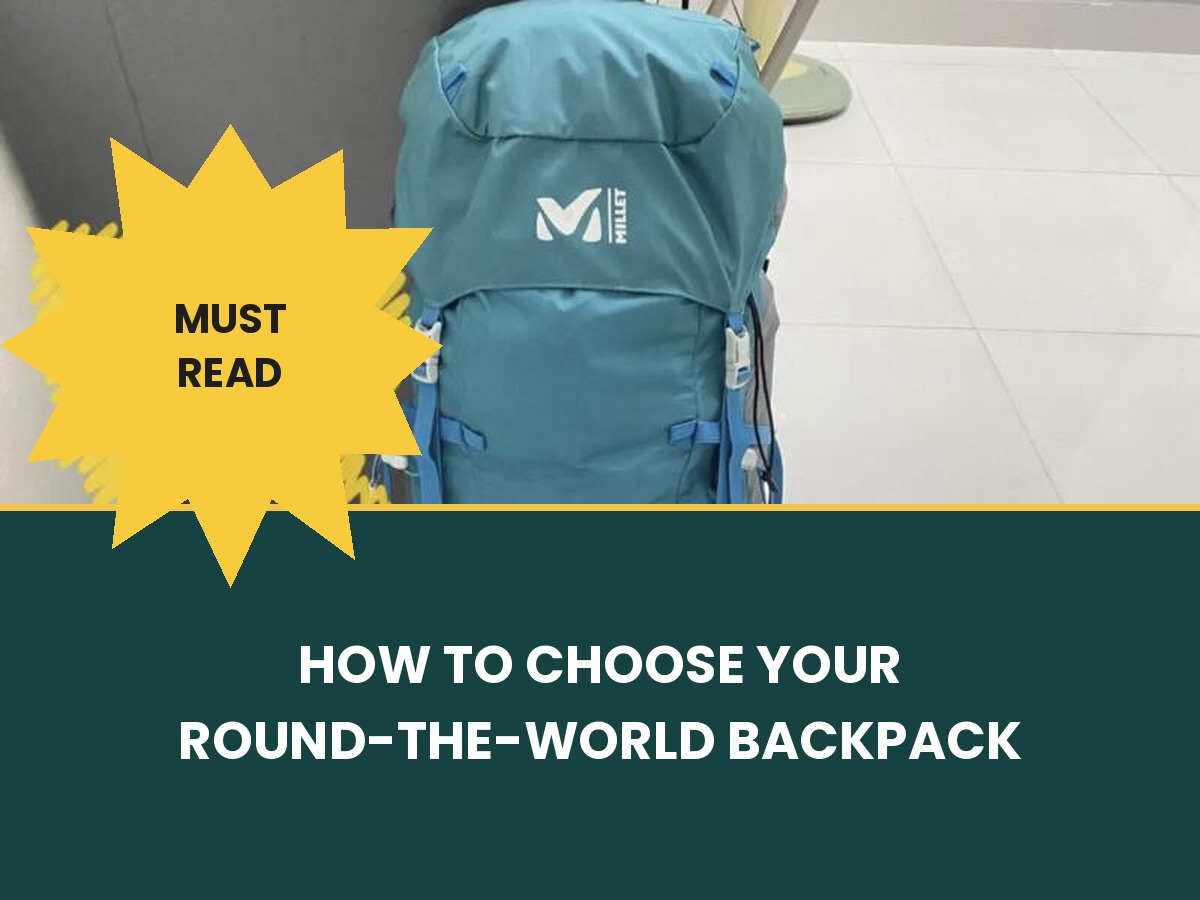
Packing for a round-the-world trip, the bags you bring matter more than almost anything else in your kit. We spent way too long agonizing over this before we left — carry-on sizing, packable daypacks, how much capacity is actually “enough” — so here’s everything we learned, based on what we actually carried for over a year on the road.
What bags do you actually need?
In our view, you need three bags:
- A main backpack
- A daypack
- A shoulder bag / waist pack
We’ll go through each one below, along with what we used and what we’d actually recommend thinking about.
Main backpack
Quick context on our travel style: we’re somewhere between budget backpacking (self-catering, cheap dorms) and a more comfortable trip (hotels, eating out) — mostly hotels, occasionally nice dorms, self-catering in Europe and eating out in Asia. We also packed for both summer and winter.
His pack: Osprey Aether Plus 85L
- Weight: 2,830g
- Capacity: 85L
- Features: rain cover, two compartments, chest/waist harness, mesh back panel, doubles as an umbrella bag

“Huge capacity — one of the biggest packs we saw other backpackers carrying. That meant we could fit a lot in, which was genuinely convenient.”
Her pack: Millet Saas Fee 40+5L
- Weight: 1,540g
- Capacity: 45L
- Features: rain cover, two compartments, chest/waist harness, mesh back panel

“The largest size that still counts as carry-on, with great functionality on top. It’s a women’s-fit pack too, so it sits really comfortably.”
What to actually think about
Our logic: to protect against lost luggage, we wanted at least one pack small enough to carry on. With that in mind, here’s what we weighed up:
His priorities: capacity, comfort on the back
Her priorities: carry-on sized, pack weight itself (carry-on has a weight limit too), comfort, chest/waist harness, mesh back panel
Carry-on size
Typical carry-on limits are “total of three sides under 115cm (55 x 40 x 25cm)” with a weight limit of 7–10kg (this varies by airline). Carry-on usually means one personal item plus one bag, with the weight limit applying to both combined.
One thing we only learned on the road: checked baggage fees on budget airlines add up fast (often $40–70 a pop), so having at least one pack that qualifies as carry-on saves real money over a long trip. We never once got stopped trying to carry the Millet Saas Fee 40+5 on board, even on numerous budget carriers.
Capacity
Unpopular opinion among minimalist packers: if you’re not trying to stay carry-on sized, bigger is better. We only carry our main packs for short stretches (30 minutes, max) since we book accommodation centrally, so the extra weight from a bigger bag barely registers — and the extra room lets you carry things that save money down the line (a camp stove, skincare ingredients, etc.).
Harness
Smaller, carry-on-sized packs often skimp on the chest/waist harness or back panel. Don’t compromise here — a solid harness makes a disproportionate difference to comfort. The Millet Saas Fee 40+5 held up surprisingly well on this front for its size.
One tip: harness buckles crack easily, so always tuck them inside the pack before checking it or putting it in a vehicle trunk — a broken buckle makes the whole pack miserable to carry.

Rain cover
Buy one if it’s not included. It’s less about rain and more about protecting the pack itself — long-distance buses especially will toss your bag into a grimy, overstuffed luggage hold where it gets scuffed and torn.
Backpack or rolling suitcase?
Backpack, no contest, for us. The case for backpacks:
- Works on any terrain
- Somewhat repairable yourself (try finding spare parts for a rolling case)
- Lighter than a rolling case (and less likely to get flagged for an overweight check at the airport)
Rolling cases win on flat ground and make packing easier, but in practice we rarely walked far with our bags — hotels tend to be central to where you arrive, and we usually land in the evening or early morning when walking far isn’t ideal anyway, so we’d just grab a taxi or tuk-tuk if the distance was long. Pavements across much of Asia aren’t accessible-friendly either (uneven, a step up from the road, debris), which makes rolling cases more hassle than they’re worth there.
What we didn’t actually need
- Water resistance — a rain cover handles this fine
- Lots of external pockets — they’re unusable once the bag goes into a vehicle trunk
- Knife-resistant fabric — that’s what a PacSafe is for (more below)
- A second compartment — just stash things you use less often at the bottom
What’s a PacSafe?
Some thieves will simply slash a backpack open with a knife and grab what’s inside. A PacSafe counters this: a slash-proof wire mesh that wraps your pack and can be locked to a pole or fixed object, so the whole bag can’t be carried off either. If you’re traveling solo especially, even stepping away to use a restroom can feel stressful without one — we’d call it close to essential.
PacSafes come in a few sizes, so pick one that matches your pack (we used a PacSafe 120 for the 85L Osprey and an 85L PacSafe for the Millet).
Protecting your belongings from theft matters, but so does protecting yourself from the financial hit of a lost camera, a hospital visit, or a cancelled flight. We traveled with SafetyWing’s Nomad Insurance for the whole trip. It’s more affordable than people expect — from around $2/day — and it’s popular with both short- and long-term travelers for covering things like theft, injury, and illness. Worth sorting out alongside your gear, not as an afterthought once something’s already gone wrong.
On top of that, you can use the reward code MUNEYUKI for 8 weeks of free electronics theft coverage — useful if you’re carrying a camera. On SafetyWing’s Nomad Insurance purchase page, click any of the three pink camera icons and enter the code there.

→ Check out SafetyWing travel insurance
Daypack
A sub-pack is non-negotiable. It’s what you’ll use most, since your main pack usually goes into a vehicle’s trunk or hold during long transfers. What we carried:
His: the top lid of the Osprey Aether Plus 85L, used as a standalone daypack (roughly 25L)

Hers: Karrimor Mars Topload 27L — packable, roomy, with a chest/waist harness and mesh back panel
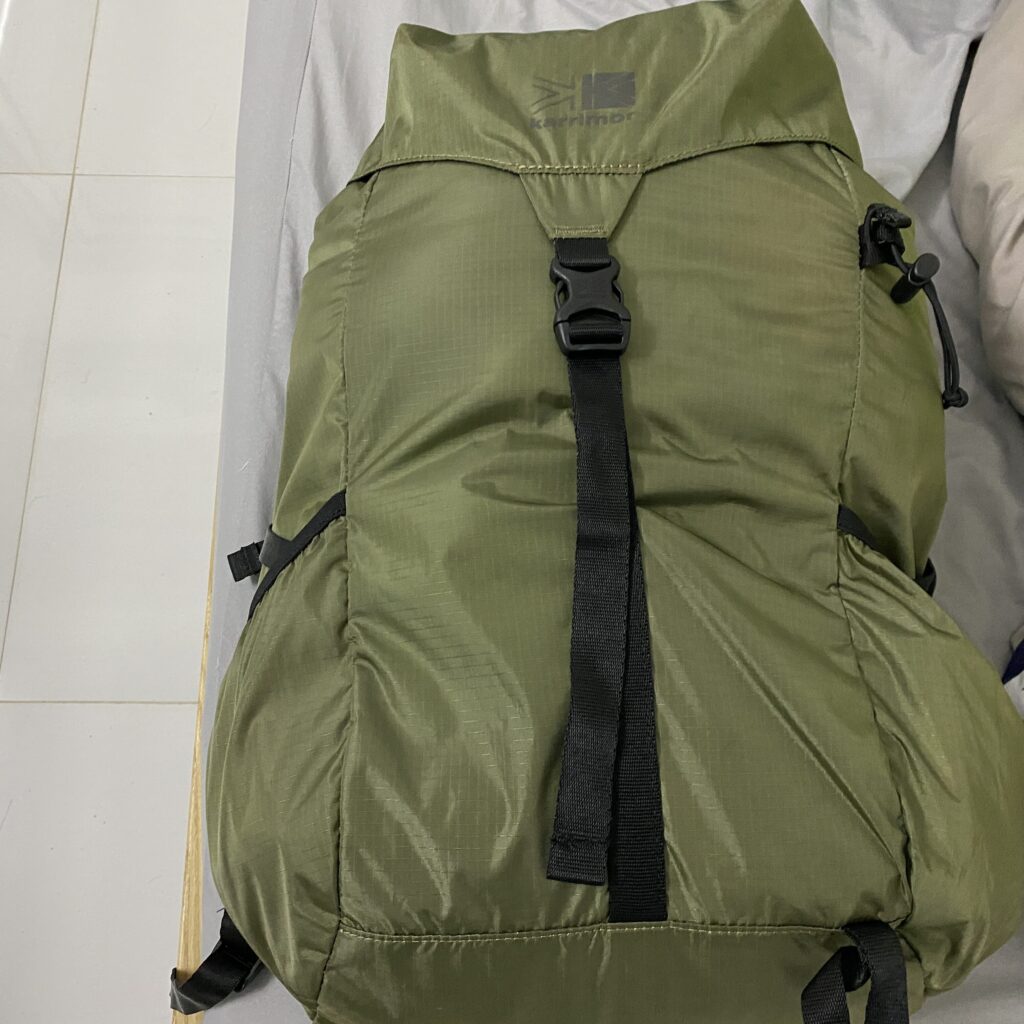
What actually matters here is capacity and how light it feels — packable fabric and a fancy harness aren’t necessary. You’ll mostly use this bag for (1) sightseeing around the city you’re staying in, where you won’t get especially tired, but you’ll often be carrying a 1.5L water bottle per person, and (2) long-distance transfers, where you’re often crammed into a minivan so a bulky daypack is more trouble than it’s worth, but you still need room for water, a jacket (vehicles run cold), snacks, toilet paper (always bring your own), motion sickness pills, a mask, and earphones.
Since the daypack never gets stuffed inside the main pack, packable fabric isn’t a priority. Every backpacker we saw on the road dressed this way — not glamorous, but practical.

Shoulder bag / waist pack
Used for walking around town. In areas with higher theft risk, being able to wear it as a front pack is genuinely useful.
His: Mystery Ranch Hip Monkey 2 — 8L, generous capacity, doubles as a shoulder or waist bag, durable

Hers: Karrimor VT Hip Bag R — 5.5L, decent capacity for its size, doubles as a shoulder or waist bag, light (270g)

We’d suggest picking one that fits a 500ml bottle comfortably, since you’ll likely be carrying one at all times. We both ended up wearing ours as waist packs most of the time, since a loaded shoulder bag gets uncomfortable on one shoulder over a full day.
Summary
What to weigh up for each bag:
- Main backpack: carry-on sizing (and whether it has a harness), capacity, rain cover
- Daypack: capacity, how light it feels
- Shoulder bag: capacity, whether it doubles as a waist pack
We’ve been happy with everything we bought. One common thread: don’t go too cheap — you want some baseline durability. Honestly, most outdoor-brand gear will serve you fine, so beyond that, just get whatever you actually like.


コメント